
Maybe it’s just me, but it always seemed like the Legend of Zelda games released for handheld consoles went overlooked and underappreciated. The likes of The Minish Cap, Oracle of Seasons, and A Link between Worlds never seem to garner as much praise or attention as their home-console counterparts even though they possess the same high quality.
In the latest example, 26 years after its Game Boy release, Nintendo has remade the original handheld Zelda game, Link’s Awakening, for the Switch—complete with a face-lift that gives almost every other 2019 release a run for its money.

I never had the luxury of playing the original Link’s Awakening or the 1998 rerelease Link’s Awakening DX when either originally came out, so I came in to the 2019 Switch version with fresh eyes. The first and most obvious thing to notice about this current version is its complete graphical overhaul: Link and Koholint Island have been given a design that makes everything feel like something you could pull from your toy box and recreate on your bedroom floor. This style is one of the many ways the game bombards your senses with a charm befitting one of Nintendo’s most cherished franchises.
The sound design also received a painstaking overhaul that permeates your adventure. The overworld and dungeons use both familiar and new songs that carry the trademark Zelda perfection that has required entire orchestras to be done right. Different types of ground under your feet will generate different footstep sounds, all the way down to Link pattering through puddles and across stone dungeon floors. It’s a seemingly small detail that you might miss, but when you notice it, you will appreciate how much work was done to include it.
As to be expected with a Zelda game, the dungeons feel perfectly designed, albeit possibly too well designed in the late game. Early dungeons gradually teach you new ways to advance, such as defeating all the enemies in an area or moving blocks to specific tiles, while later dungeons will introduce new methods such as strategically placing items or using newfound weapons to progress to previously inaccessible rooms. The difficulty with this comes in later dungeons when you have so many different methods to progress that you sometimes simply have to try them all if the obvious way forward isn’t working. Do you need to bomb a hidden wall that you could only locate if you prod the environment with your sword? Do you need the new item from this dungeon to cross a gap? Are you out of keys, but the only places you can go all require keys? Most of the time, the best way forward is to go back to the beginning of the dungeon and go room to room testing different methods until one yields results.
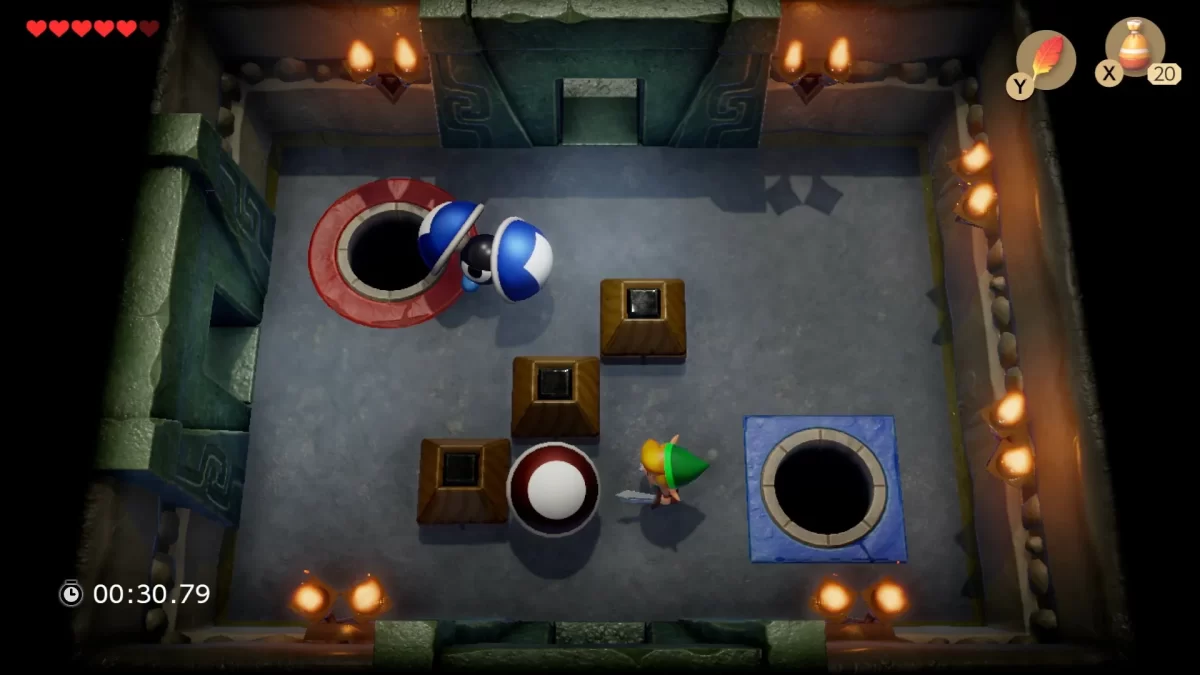
Unfortunately for you—or for Link’s Awakening, depending on your perspective—the game has a few flaws from which the charm can only distract for so long. The biggest of these seems to be the lack of direction at various points throughout your playtime. In between dungeons, the game will gently guide you to the next of your objectives, some of which are more vague than others and can leave you exploring the entire map to discover where you are supposed to go next or throwing your entire arsenal at a boss trying to find its weakness. Whether it’s a hint about the location of your next dungeon or a line of NPC dialogue that tells you about an item that will help you access new areas of the map, Link’s Awakening left me scratching my head on more than one occasion, which ultimately led to me puling up a walk-though.
One of the more nitpicky issues I had with the game was when I was using Roc’s Feather. You get the feather fairly early on from one of the first dungeons, and it becomes an integral tool for exploration, both in dungeons and out in the world as a whole. The problem is the feather has a pretty small windows for when it can be used to cross gaps, and more often than not I fell into the abyss when I pressed the jump button. In a world filled with games that have pixel-perfect jump and dodge mechanics, Roc’s Feather feels slightly out of place and will make you rethink how and when to time your button presses to use it successfully, especially when you pair it with the Pegasus Boots later on.
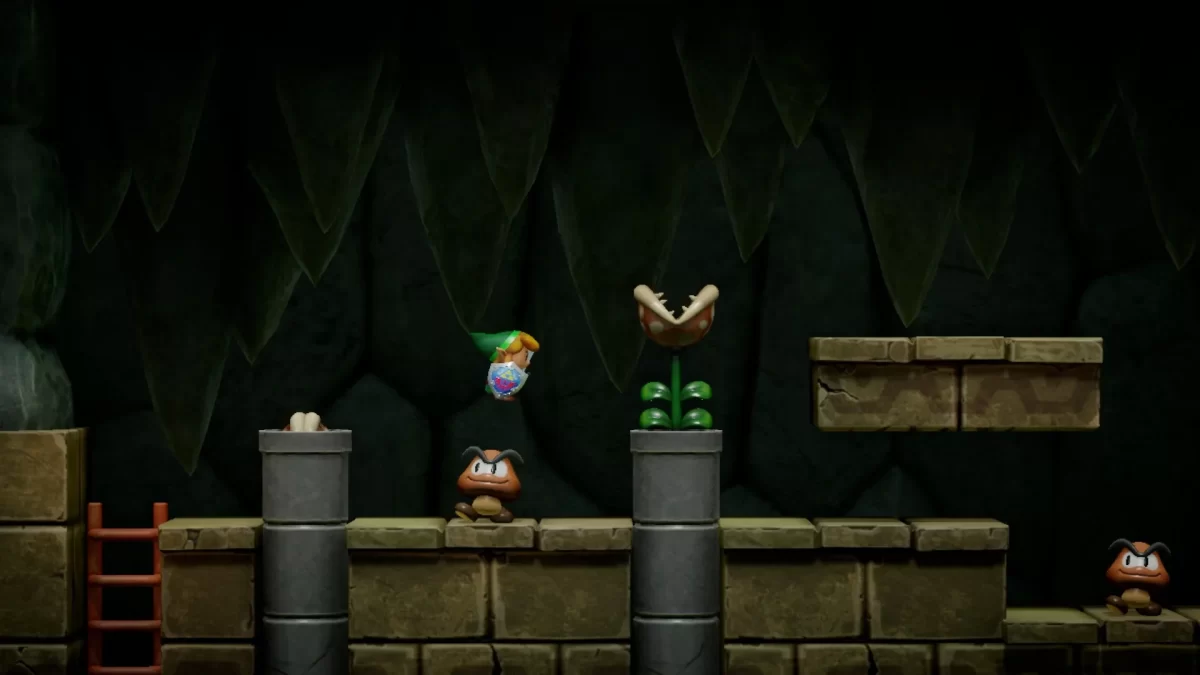
These frustrations aside, I was still utterly charmed with Link’s Awakening from beginning to end. The goodwill and good feelings it creates while playing carry the game effortlessly through the good times and make sure you don’t quit out of frustration during the bad times. This was developer Grezzo’s first home console collaboration with Nintendo after publishing a rash of handheld titles—including Ever Oasis, Luigi’s Mansion, and the remakes of Majora’s Mask and Ocarina of Time, all for the 3DS—and they knocked it out of the park. Even though it’s a remake, Link’s Awakening stands on its own as another shining example of why the Switch, despite originally coming out two years ago, is a dark horse candidate for best console of 2019.
The Legend of Zelda: Link’s Awakening was released on September 20, 2019, exclusively for the Nintendo Switch.
*Originally posted on Twin Cities Geek on December 11th 2019*