
If you’ve been paying attention to video games for the past few years, you’ll know that Kickstarter is a popular platform for developers to try to create new IPs heavily influenced by their previous successful franchises. Games like Mighty No. 9, Yooka-Laylee, and Broken Age turned to Kickstarter in an attempt to create a new IP that would act as the spiritual successor to a previously established franchise such as Mega Man or Banjoo-Kazooie. Unfortunately for those games, they didn’t exactly meet with much critical or commercial success, despite being helmed by the creators of the franchises on which they were based. Would Bloodstained be able to thrive is a similar environment where so many others had failed? Short answer: “yes” with an “if;” long answer: “no” with a “but.”
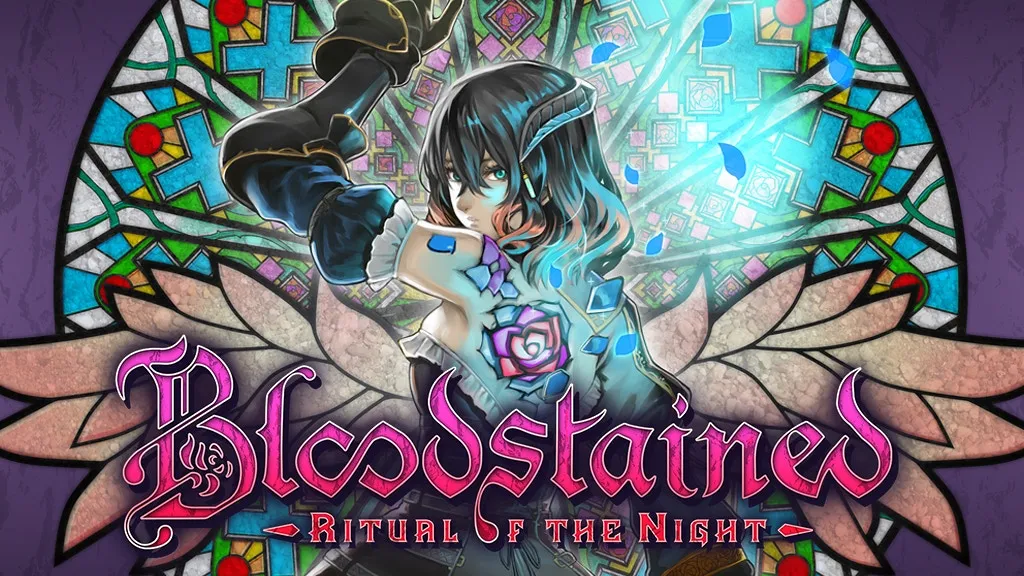
If you couldn’t tell by the title—of the game or this article—Bloodstained: Ritual of the Night is a spiritual successor to the Castlevania franchise, most specifically Symphony of the Night, and it was produced by longtime Castlevania producer Koji Igarashi. If you are familiar with Castlevania, or any other Metroidvania-style game, you know exactly what Bloodstained has in store for you: an expansive castle to explore full of monsters to slay who grant you their powers to help further your exploration. But, unlike the other Kickstarter-funded games before it, Bloodstained manages to capture the spirit of the franchise it emulates and provides a worthwhile experience for first-time, and longtime, Metroidvania fans.
Bloodstained doesn’t hide its very obvious Castlevania influences, or at least it doesn’t hide them very well. Rather than pretend to be something entirely new while shamelessly ripping off an established franchise, like every Dark Souls clone that came out after 2009, Bloodstained is entirely just Castlevania wearing a hat that says, “Bloodstained, not Castlevania . . .” This time, the protagonist is female, and this isn’t Dracula’s castle, so it’s new, see? But if you can ignore the flimsy disguise and lean into enjoying a new Castlevania experience, you will get the most out of Bloodstained that you can.
The gameplay follows a similar progression to previous Castlevania games. You start out mostly powerless, with only rudimentary equipment to explore a large castle that has appeared in the distance. As you move forward, you begin to find parts of the map that seem inaccessible, especially in the early stages of the game; you will need to come back to these after you have unlocked certain abilities or accessories. Each monster in the game, or at least most of them, has the possibility to transfer its abilities to you when you defeat it. Most of these are simple magical attacks, such as fire balls or lightning, while some are passive abilities that raise your stats or aid you in exploration. The biggest problem with this system is that there are so many monsters that most of these abilities will go unused, especially when you start to unlock late-game boss abilities that are too good not to spam for the rest game.
Bloodstained does offer a few cosmetic customization options for your protagonist, Miriam, in the form of helmets and certain accessories. Later in the game, you can also find an NPC that offers to change other cosmetic things like your hair, both in cut and in color, as well as the color of your dress and eyes. Personally, I am always a fan of a game that gives you a certain freedom in the way your character looks, even if it is an established character as opposed to an entirely player-created character. The only real downside of this feature can depend on how invested in the story you are. It can be distracting in cut-scenes, especially late-game dramatic scenes, when your Miriam is wearing a cowboy hat at a breathing regulator as she waxes philosophically about the meaning of her existence.
My biggest issue with Bloodstained is the vague nature of how progression is explained to you, especially given the multiple endings the game has. Some games, like Dark Souls or Skyrim, don’t provide much in the way of explanation for where or when to go next when you find yourself lost, but Bloodstained isn’t nearly as big as these games, and it can get frustrating when you have explored as much of the castle as you can and still don’t know where to go next. I can safely admit to looking up where to go more than once only to find out I was supposed to acquire an ability that let me breathe underwater from an obscure monster that doesn’t always drop the ability when killed. There is also a shortcut system that allows you to quickly change equipment and abilities on the fly, but I never quite got a handle on that, instead resorting to simply opening the menu to change equipment as needed.
Even after beating the main story, Bloodstained provides a lot of opportunities to go back through to complete things like the bestiary or synthesis list, as well as a New Game+ option if you didn’t get the ending you were hoping for. After I finished the game, I wasn’t ready to be done with Bloodstained, so I set out to achieve the Platinum trophy by completing all the recipes, obtaining all the items and equipment, and defeating all the monsters in the game. Thankfully, even at the end of the game I never felt like I was mindlessly grinding through it. Even while super overpowered with every ability in the game, I was still enjoying traversing the castle to obtain rare materials to fuse that last whip I needed in order to complete my items list.
Circling back to my original point: Yes, Bloodstained is a great game, especially if you have a history with or interest in similar franchises like Metroid or Castlevania. But, if you were hoping for a wholly new experience or were never a fan of the Metroidvania formula to begin with, no, Bloodstained won’t do anything new to persuade you to give it a try. There have also been documented issues with the Switch port of the game since release, possibly due to the game originally being developed for Wii U and moving over to the Switch later in the run of the Kickstarter campaign. The developers have vowed to resolve these issues for those who held out for the handheld version. But I played Bloodstained on the standard PS4 and only had mild problems involving some texture issues on walls and floors and some frame-rate slowdowns when transitioning between maps or in instances of high animation, especially in boss fights.
Bloodstained: Ritual of the Night was released on PlayStation 4, Xbox One, and Windows on June 18, 2019, and on Nintendo Switch on June 25, 2019.
*Originally posted on Twin Cities Geek on July 30th 2019*